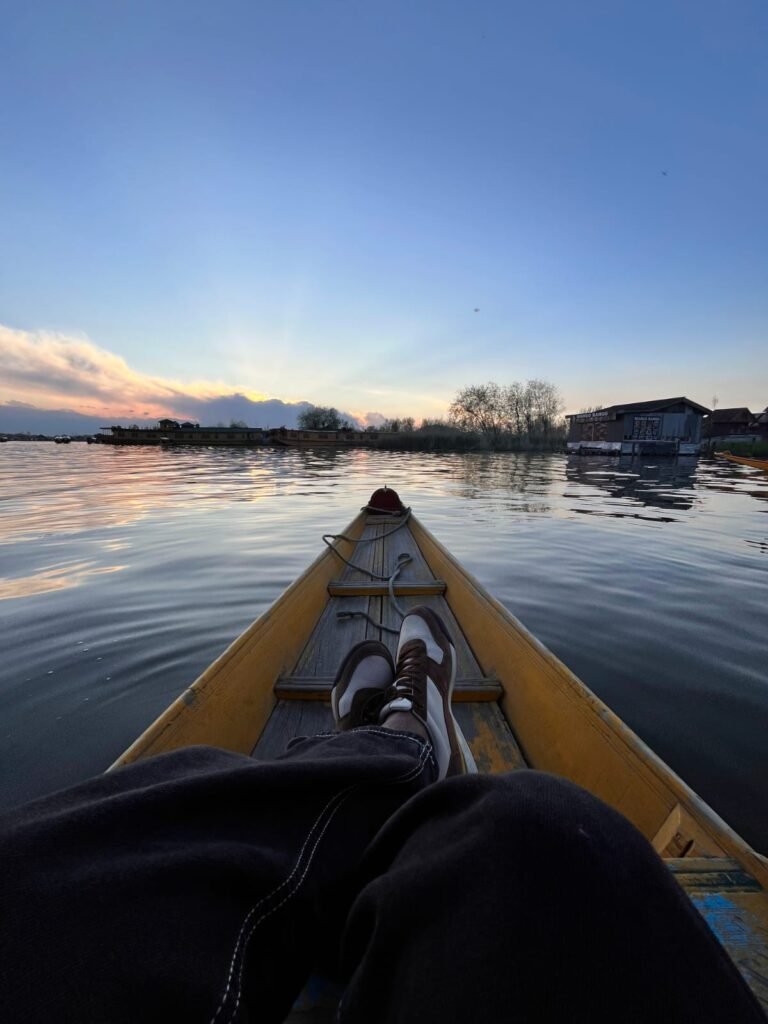
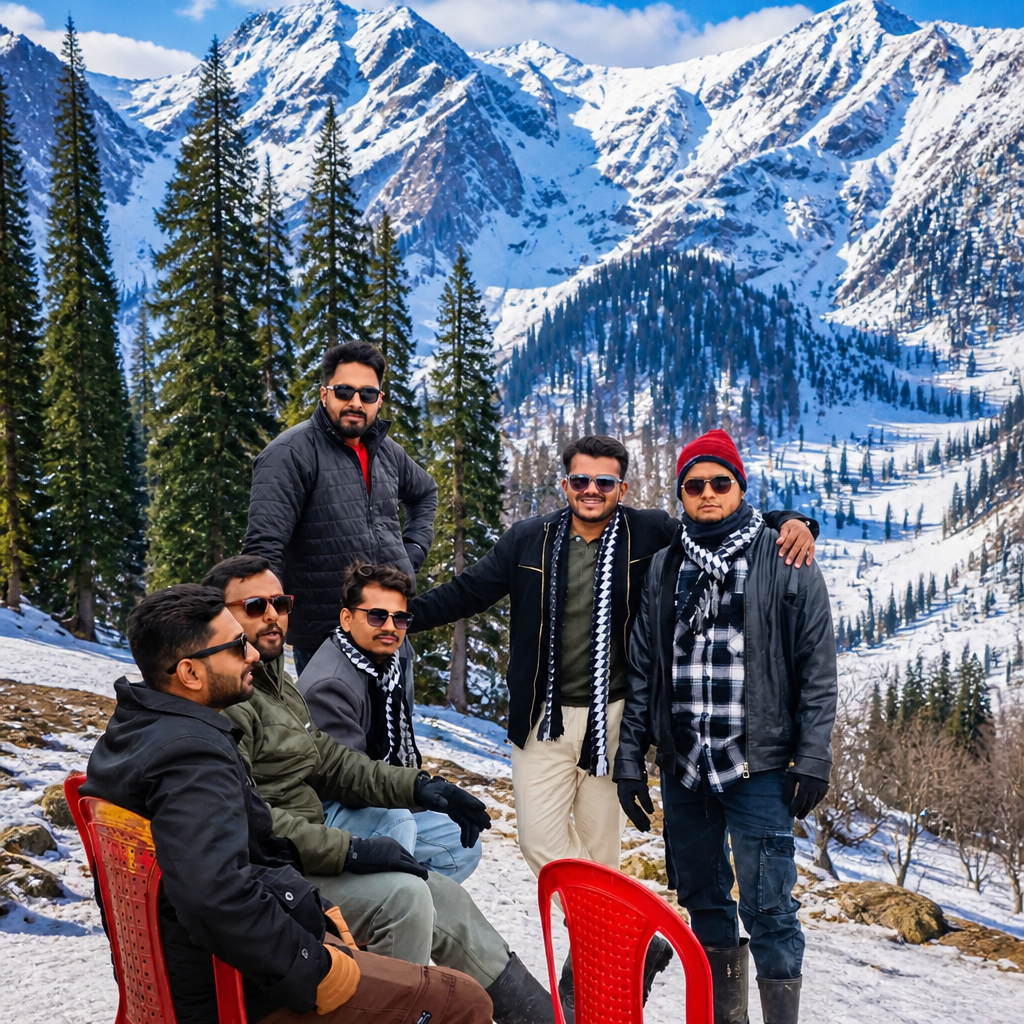
From Kashmir Diary (Travelogue)
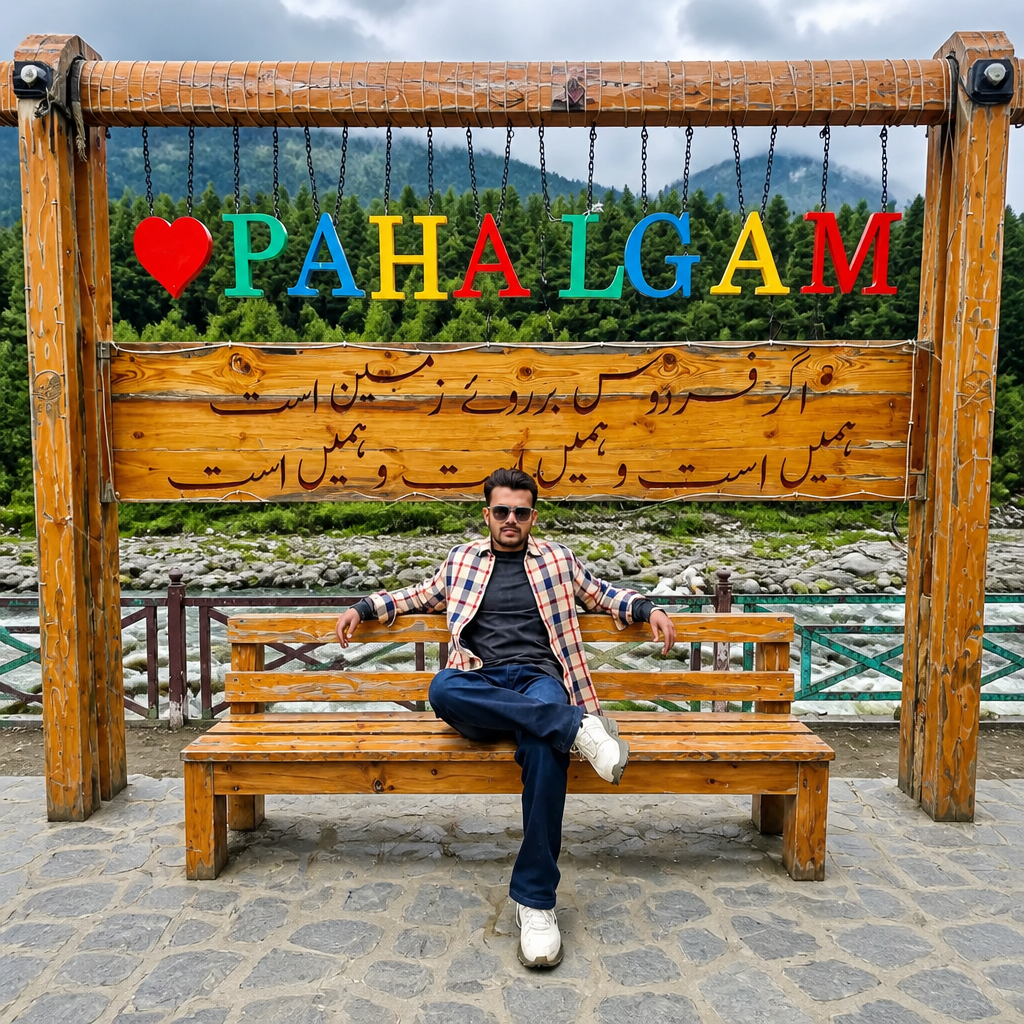
Today was the day of return. We had to bid farewell to Srinagar, not knowing for how long. Early in the morning, everyone was ready, tying their bags and belongings onto the vehicle. Although we were heading home, we had to make a stop in Pahalgam. There was still one rare gem of Kashmir left to see, and we did not want to miss it.
Packing the luggage and then having breakfast took some time. Along the way, there were several cricket bat factories and shops, and some friends stopped to buy bats. Bats were truly very affordable here.
On the way to Pahalgam, Pampore comes along the route. There are quite a few dry fruit shops right along the main road. Yes, things are considerably expensive here, but the quality is also the finest. Buying dry fruits from Lal Chowk is more economical.
However, if quality is what you desire and you don’t mind spending a little extra, then buy your dry fruits from here. We friends bought saffron, mamra almonds, walnuts, and more from this place.
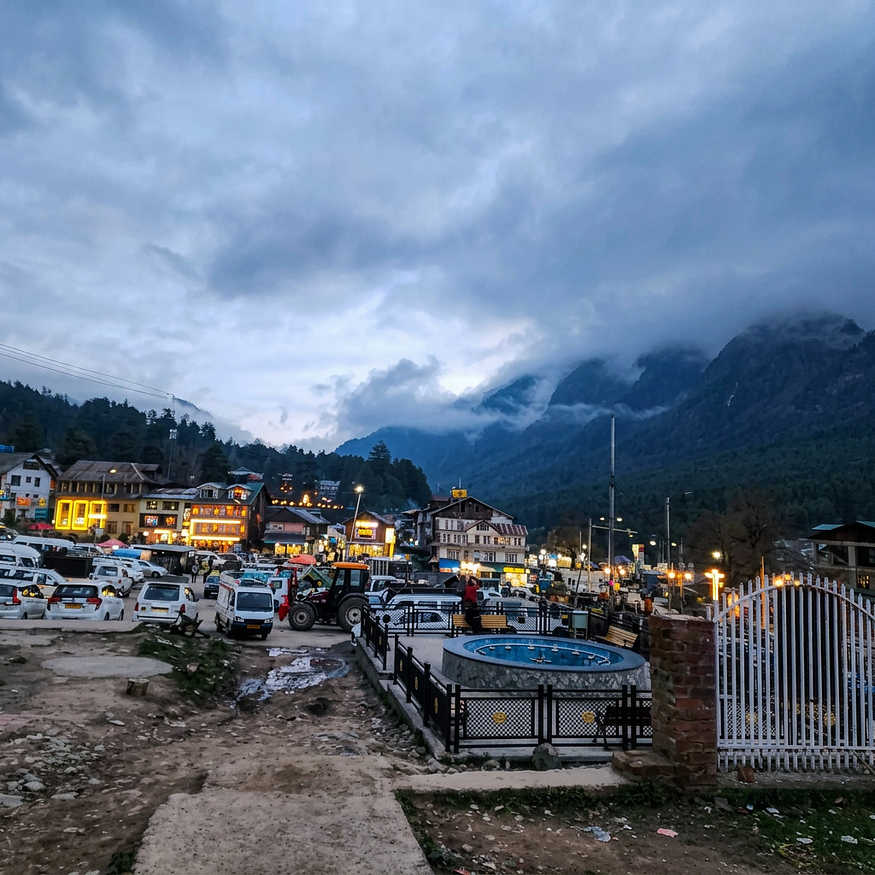
By the time we reached Pahalgam, evening had set in. It was very cold here as well, even though there was no snow anywhere. Pahalgam requires at least one full day. Because it is a major tourist destination. In my opinion, one should stay here for two days, explore everything, and only then head back.
Pahalgam, often called the “Valley of Shepherds,” is one of the most beautiful tourist destinations in Kashmir. Here you can witness lush green meadows, flowing rivers, and enchanting mountain scenery. Aru Valley, Betaab Valley, and Chandanwari Valley — all three of these places are generally visited in a single day by local taxi.
Betaab Valley was previously known as Haggan Valley; later, due to the filming of the movie Betaab, it came to be called Betaab Valley. It is renowned for its lush grassy meadows, snow-covered mountains, and the beautiful scenery of the Lidder stream.
Aru Valley is an exceptionally beautiful village approximately 12 kilometers from Pahalgam. It is an ideal place for trekking, horse riding, and nature walks.
And Chandanwari is the starting point of the famous Amarnath Yatra. It also offers a wonderful opportunity to see snow, especially in the early summer months.
Beyond these, there is also the strikingly beautiful Baisaran Valley, often called “Mini Switzerland.” It is an extraordinarily beautiful place surrounded by pine trees and lush green meadows. One can reach it on horseback or on foot.
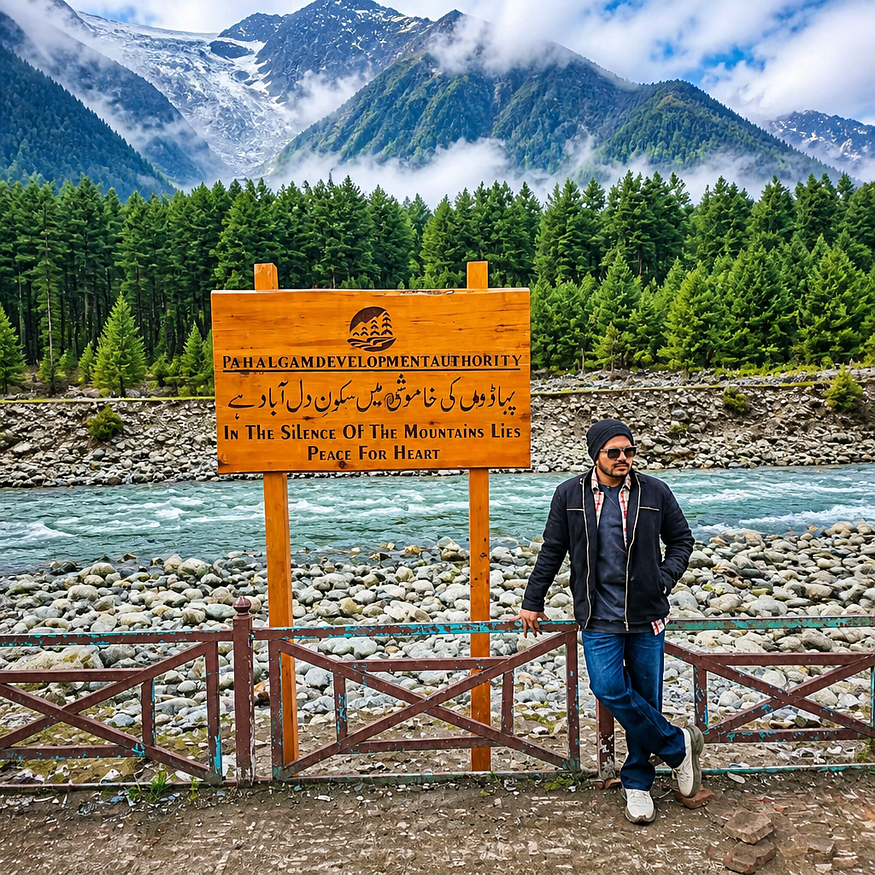
It is the finest spot for photography, leisurely walks, and spending peaceful time. However, due to the terrorist attack that took place last year, it remains closed to this day. Tourists are still not permitted to visit there. And we were left deprived of it. How we wish we could have seen Mini Switzerland.
The moment one sets foot on the soil of Pahalgam, it feels as though you are living inside an enchanted world or within the finest masterpiece of a great painter. There is a strange magic in the air here that fills the very soul with fragrance.
When the clear and icy water of the Lidder river strikes against the rocks and raises a sound, that sound does not seem like noise at all — it feels like a melodious song of nature that gathers up all the sorrows of the weary traveler.
I have heard that when you stand in the vast green meadows of Baisaran and your gaze meets the peaks of the distant snow-covered mountains, the heart calls out involuntarily that nature has carved this valley, with great patience and leisure, in the image of paradise.
The tall and lofty deodar trees, which seem to be whispering to the sky, and the innocence hidden within the silence of Aru Valley — all of it makes a person feel like a stranger in their own world. When the first ray of the sun falls upon the velvety green of Betaab Valley, every scene begins to shine like gold, and the entire valley adorns itself like a bride.
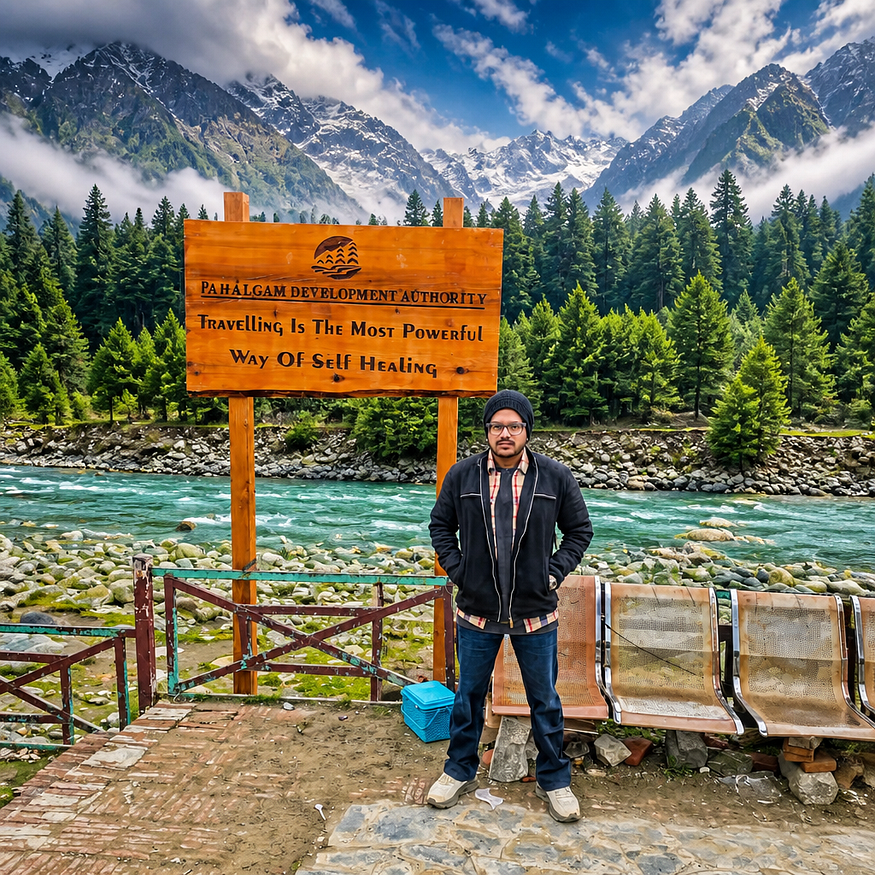
Pahalgam is not merely a place — it is a feeling, one that spreads a deep blanket of peace over the heart and mind of a person. Every moment spent here becomes the most beautiful chapter of life’s book, one that the soul wishes to revisit again and again.
From Pahalgam, we were now making our way toward our own city. The journey through Kashmir was as beautiful and pleasant as it was unique. The language here, the culture, the attire, the way of living, the manners, the food — everything is entirely different and better.
Generally, in India, every hundred kilometers brings a change in the way people speak, the way they live, the food they eat. But somewhere or the other, there is always a similarity.
Here in Kashmir, however, even the houses are built in a completely different style, which makes them very beautiful. The mosques here are also of an entirely different character, and every mosque is extraordinarily beautiful.
Kashmiris appear to be a distinct people altogether. They are very fair-skinned, and most of them are tall. Wherever they go in India, they are easily recognized as Kashmiris. Just as Kashmir is beautiful, so too are the Kashmiris. That is why Kashmir is called the crown of India — because a crown is always beautiful and dignified, one that becomes the adornment of the head.
Kashmir is ours and Kashmiris are ours, and we are glad that the Kashmiris and Kashmir are an inseparable part of India.
One should travel. In fact, one should keep traveling. Every person living in India should visit Kashmir at least once. Go and see for yourself how beautiful and paradise-like that part of India is. See the people there — they too are Indians, but how elevated is their character, how gracious their conduct. How hospitable and loving they are.
From the statement of Maulana Abul Kalam Azad regarding the importance of travel, I gained personal experience of its truth. Maulana says: “I have acquired half of my knowledge through travel. The solitude of study gave me intellectual growth, but the observations of travel gave my vision breadth. Those who do not travel live under the dome of Bismillah.”
“Travel grants man an indirect knowledge of the histories of nations and the stories of lands, just as in the teachers of science there exists an understanding of the realities of things — in the same way, travel grants knowledge of the truths of human qualities and reveals the temperaments and natures of different peoples.”
Kashmir is beautiful, and in every season its beauty is distinct. The true magic of Kashmir’s beauty lies hidden within its changing seasons. Every season here brings a new picture, a new feeling, and a different delight.
From March to May, it is the season of spring here.
In spring, Kashmir feels like a colorful dream. New leaves appear on the trees, almond and cherry blossoms bloom, and greenery and fragrance spread in every direction.
In this season, you can visit the Tulip Garden and Mughal Gardens of Kashmir and feel the light cool breeze, the pleasant weather, and the freshness of nature. A festival of colors, gentle sunshine — as though a new and joyful life has begun.
After this, from May to August, comes the summer season here.
But unlike the other states of India, it does not get hot here. It is a pleasant kind of warmth. The temperature rises to a maximum of only 22 degrees, reaching up to 32 degrees only in Srinagar.
In summer, Kashmir offers a heavenly sense of coolness, especially when the rest of India is suffering in intense heat.
Generally, Kashmir is well known for its cold season and snowfall, which lasts from December to February — but for sightseeing in Kashmir and experiencing it like paradise, March to August, covering both the spring and summer seasons, is the best time of all.
Tourists from warmer regions come to Kashmir during these very months. Because in winter, the cold here is beyond endurance. It is not something everyone can handle.
For enjoying the natural scenery and the beautiful valleys of Gulmarg, Sonamarg, and Pahalgam, the summer season is ideal. You can go trekking and nature walking in this season. The greenery all around, the clear blue sky, and the cool breeze will carry you away into an entirely different kind of bliss.
After the summer comes the autumn season — in September and November.
In autumn, Kashmir is painted in golden and red hues. The Chinar trees create a magical scene with their leaves. Artists and nature lovers prefer to visit during this season.
This is the finest time for visiting the saffron fields and for photography. The atmosphere is quiet and peaceful. Golden leaves, red Chinars, and a poetic melancholy draw the artistic souls toward them, and then they lose themselves in one another.
Then arrives the season for which Kashmir is known — the winter season. From December to February — intense cold and heavy snowfall. It feels as though Kashmir has wrapped itself in a white blanket of snow, as though paradise has descended upon the earth. White snow, a silent atmosphere, and a magical scene — it is a truly extraordinary sight to behold.
In this season, skiing and snow sports in Gulmarg, Kashmiri kahwa, and pony rides through the valleys are more than enough to steal your heart away.
Kashmir tells a different story in every season. Life in spring, peace in summer, poetry in autumn, and magic in winter. Nature has established beauty here for every kind of traveler. Whatever one’s temperament, they can go to Kashmir in that very season and lose themselves in its valleys. This paradise is for everyone.