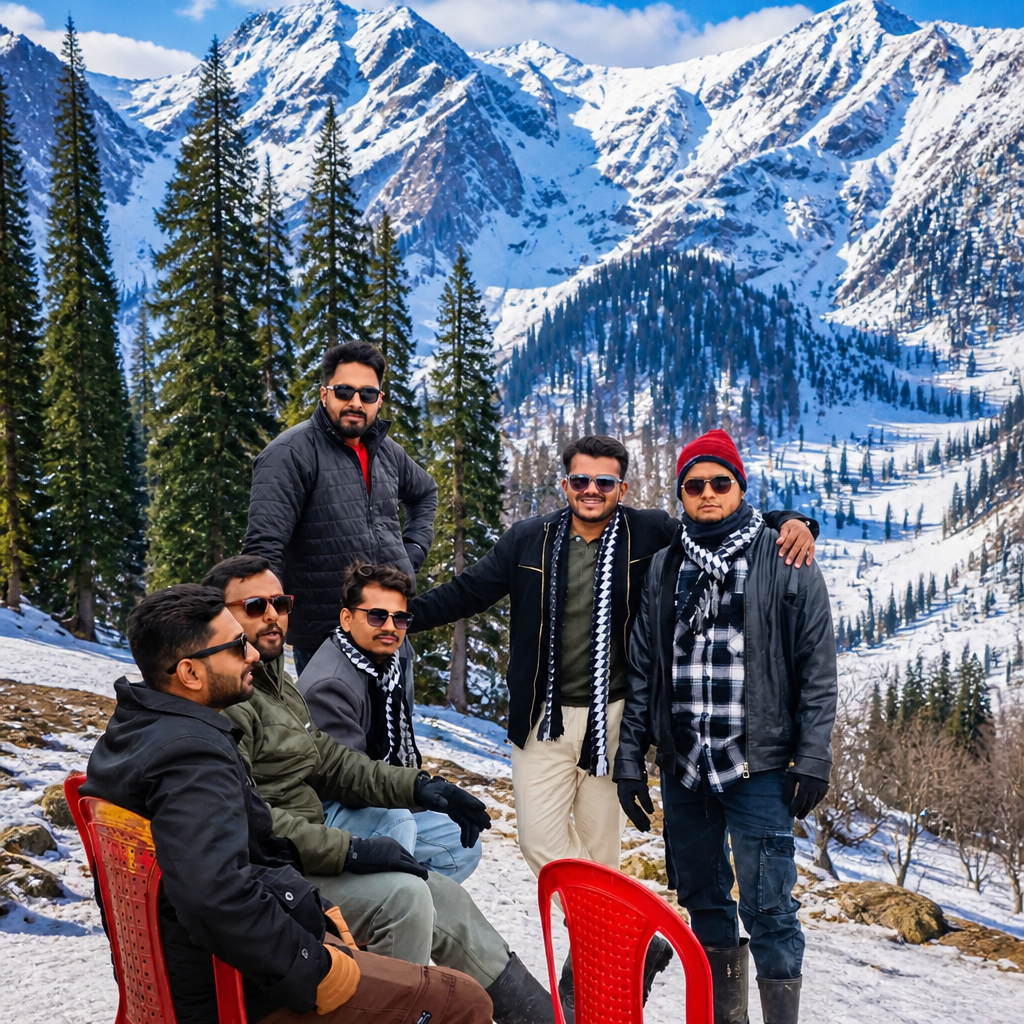
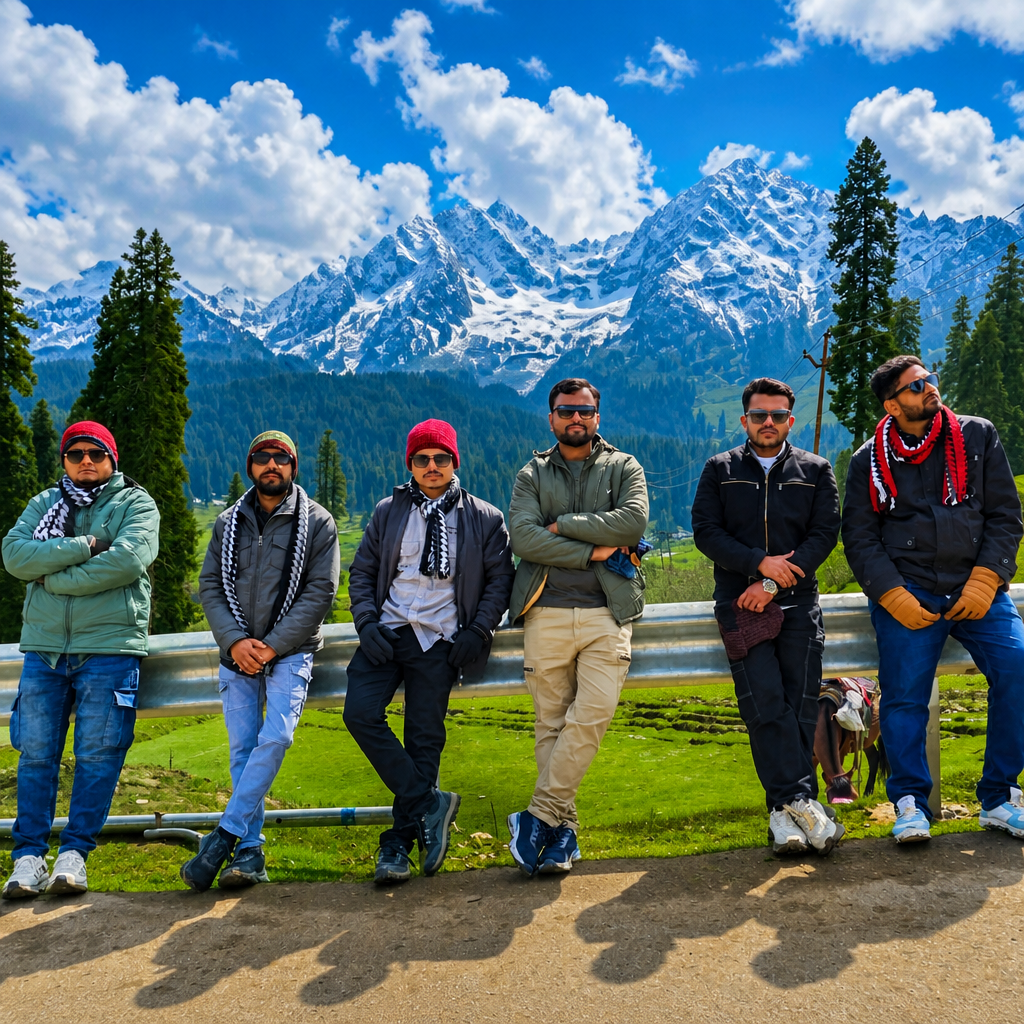
The tale of a traveler on a rare journey — a story everyone should read.
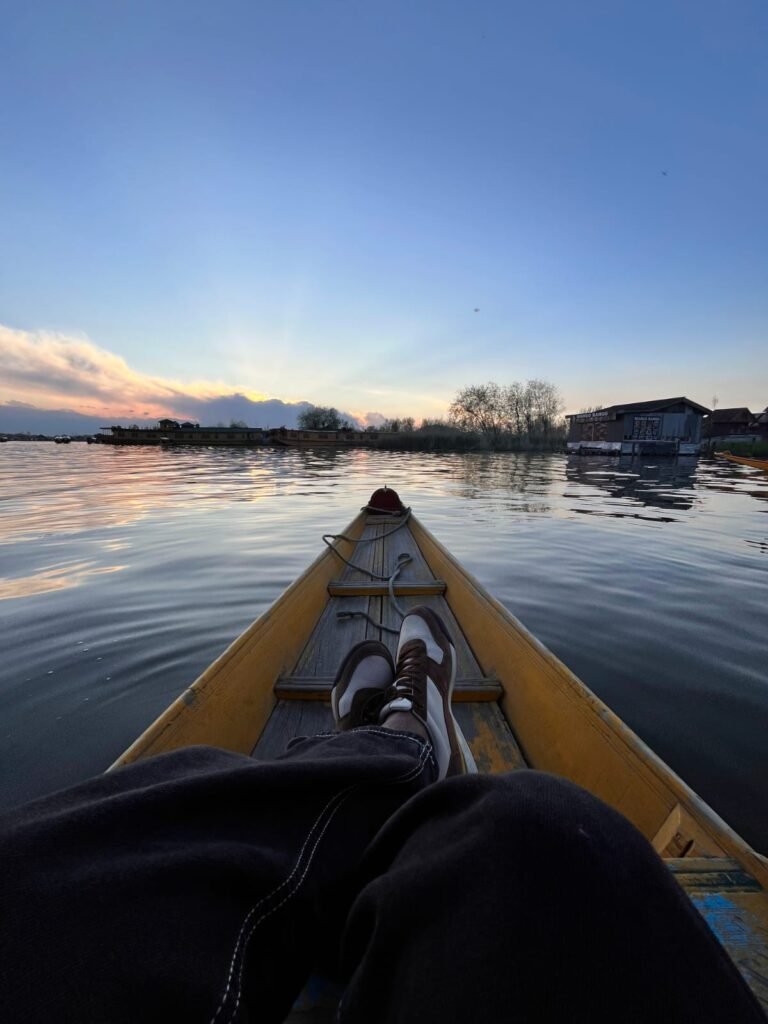
Ifound it even more beautiful than everything I had heard about it. It is extraordinarily breathtaking. Only when I saw it with my own eyes did I truly understand why it is called paradise. How beautifully Amir Khusro said it:
Agar firdaus bar roo-e zameen ast, Hameen ast o hameen ast o hameen ast.
(If there is a paradise on earth, it is this, it is this, it is this.)
Chapter One: “Srinagar” — The First Stop of Cherished Memories
Written by ✍️ Imran Ahmed
By the time we reached Srinagar, it was already 11 in the morning. And by the time we found an affordable hotel, it was 3 in the afternoon. It was not that budget hotels and rooms were unavailable in Kashmir, but we wanted a decent room in a good, upscale area at a reasonable price.
The areas where cheap rooms and inexpensive hotels were available happened to be located behind Dal Lake, in the far-end sections of the lake. Everything there looked neglected and worn out — as if we had not arrived in Srinagar at all, but had somehow ended up in some rural village.
Dal Lake in that area had turned into nothing more than a large drain. It did not feel like Dal Lake at all. Because of the cheap rooms, most visitors from Dhule, Malegaon, Aurangabad, and the surrounding areas tend to stay there.
The amusing part is that we too arrived in that very area first, accompanied by a local agent, and we thought to ourselves that we had never imagined Srinagar could be this bad. A wave of disappointment washed over us — where on earth had we ended up? — but our hearts simply refused to accept it.
We then searched the internet for a good hotel and made a phone call. The receptionist asked us to come to Ghat Number 11. Upon searching, we discovered that we were on the wrong side of Dal Lake entirely — a side where there was no trace of any ghats or ghat numbers whatsoever. Then an auto-rickshaw driver charged us 100 rupees, and the four of us set off from there to book a hotel, while the rest of our friends stayed behind.
Once we left that area and made our way to the front side of Dal Lake, we said to ourselves — yes, this is Dal Lake. Dal Lake, nestled in the heart of Srinagar. The lake that is called “the jewel in the crown of Kashmir” and “the lake of flowers.”
It is nature’s masterpiece — one that dazzles the eyes and nourishes the soul the moment you lay your gaze upon it. Situated at an altitude of approximately 1,583 metres above sea level, this lake stretches across a water surface of 18 square kilometres — that is, 18 million square metres. Dal Lake is 7.44 kilometres in length and 3.5 kilometres in width, while its total shoreline extends 15.5 kilometres, along which Mughal-era gardens, parks, hotels, and a beautiful boulevard road stand in an elegant row. Along the banks of the lake lie numerous ghats, commonly referred to as gates as well.
These serve as the main points of access to the lake for both tourists and the local population. These ghats are the arrival and departure points for shikaras and boats, from where visitors can hire a shikara and glide out into the vast expanse of the lake.
Among these ghats, Ghat Number 1 — also known as Gate Number 1 — located at Bodiyar Chowk, holds a special distinction. It is from here that postcards can also be obtained to reach the world’s one-of-a-kind floating post office.
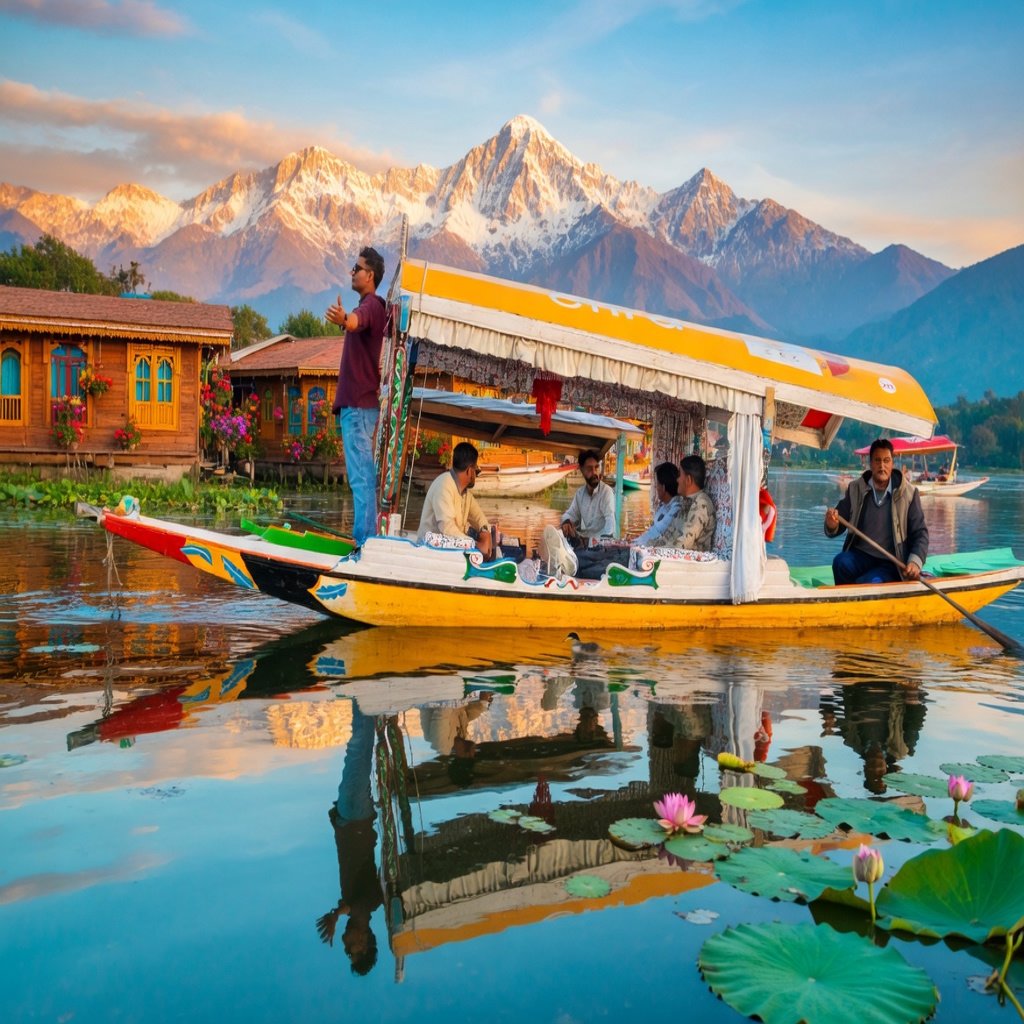
For tourists, the most captivating experience on Dal Lake is undoubtedly a shikara ride. This small wooden boat, adorned with colourful carpets and soft cushions and known as a “shikara,” takes visitors on a tour of Shalimar Bagh, Nishat Bagh, Hazratbal Mosque, Meena Bazaar, Char Chinar Island, Sona Lanka, Nehru Park, and the floating gardens.
When the sun sets and the surface of the water absorbs the orange hues of the sky into itself, that moment becomes utterly unforgettable. The lake is home to beautifully carved wooden houseboats — referred to as “floating palaces” — which are categorised into various grades, much like hotels. Staying in one of them is a uniquely dreamlike experience in itself.
The floating post office, which was opened in 2011 on the western shore of the lake and also houses a philately museum, is a rare and singular institution of its kind in the entire world. Meena Bazaar is a row of shops set up on boats right within the lake, where tourists can purchase Pashmina shawls, papier-mâché handicrafts, jewellery, and souvenirs.
The Mughal masterpieces along the lake’s shores — Shalimar Bagh and Nishat Bagh — along with Hazratbal Dargah and the Shrine of Poets, transform a visit to Dal Lake into a complete journey through history, culture, and spirituality. Thus, this lake is not merely a body of water; it is a living, timeless confluence of Kashmiri civilisation, history, and nature.
Across the main road from the ghats of Dal Lake stand some of the finest hotels and residential buildings. The rooms in those hotels that face Dal Lake directly carry considerably higher rates — and rightfully so, for the moment you open the windows or step onto the balconies, a captivating view of Dal Lake greets you.
Since we needed a hotel at a reasonable price, we searched within the interior parts of that area. After a great deal of searching, we finally found the best room within our budget.
By the time we freshened up and got ready to step out, evening had already set in. The cold had also intensified. We made our way to Lal Chowk. Here, you will find everything — from large showrooms of big brands to cheap everyday markets. Every kind of item, at every kind of price, in whatever quality you desire, is available here.
The entire area of Lal Chowk and its surroundings is exceptionally clean, peaceful, and beautiful. The “Mecca Market” here is affordable and excellent for local goods — especially clothing, shawls, dry fruits, and more. Yes, bargaining does happen here, and you will have to do it too if you want to shop at the lowest possible prices.
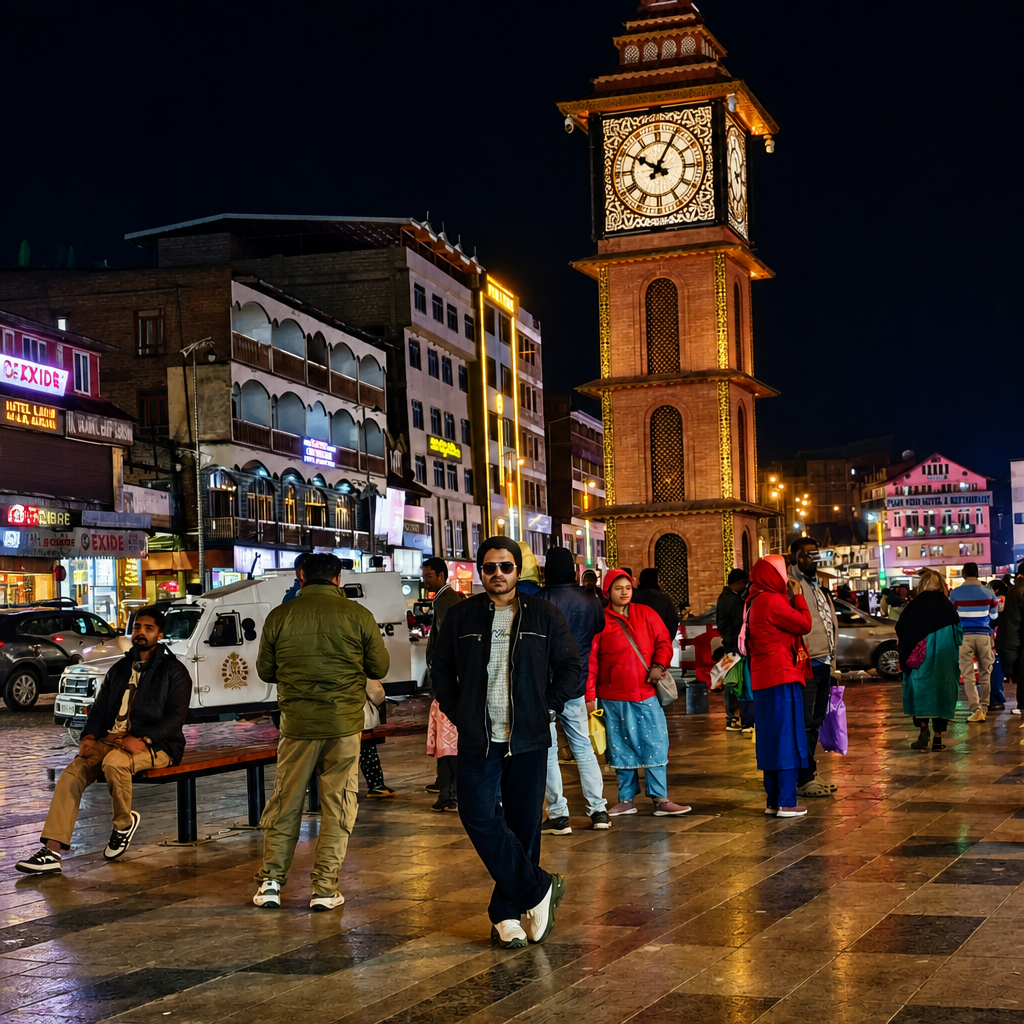
There are also good restaurants here. Mughal Darbar is the most famous and is known for its outstanding flavours. It draws a large crowd of locals. However, it is a little on the pricier side. Kashmir’s famous dish, “Wazwan,” is available here for five thousand rupees, and it can be shared among three or four people.
Right next to Mughal Darbar, on the first floor, there is another restaurant also called Mughal Darbar. It may not be the original, but it is a fairly large and pleasant restaurant nonetheless. And the dishes here are considerably cheaper than the original Mughal Darbar. “Wazwan” is available here for twelve hundred rupees, though it is only enough for two people.
Similarly, for delicious and affordable food, there is Karima Restaurant, which always draws a crowd of both locals and tourists. There are also many other restaurants and small food stalls scattered throughout the area.
On the second day, very early in the morning, we headed to Kashmir’s most famous and beautiful garden — the Tulip Garden. We had wanted to arrive as early as possible and we did, but having breakfast outside caused a slight delay.
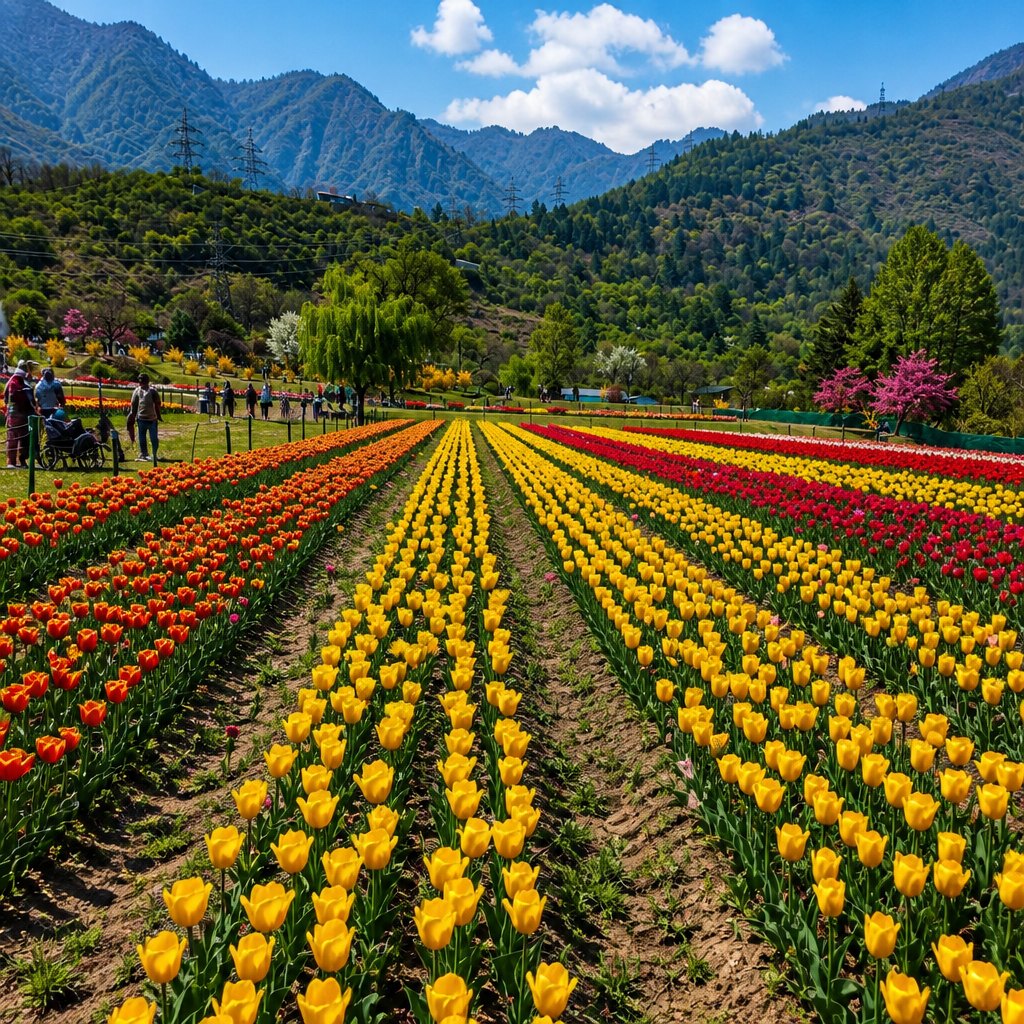
We bought our tickets and went inside. The Tulip Garden, located near the royal walls of Shalimar Bagh, is an unparalleled creation of Kashmir — one that enchants the world every spring with a colourful spectacle of millions of flowers. Here, endless rows of red, pink, yellow, purple, and white tulips bow in graceful curves, as though a sea of colours had descended upon the earth. Artificial fountains have been installed at various spots throughout the garden. Likewise, a beautiful artificial stream has been laid through the middle of the garden, which further adds to its beauty.
The moment you step into this paradise of fragrance and colour, a new feeling stirs within the heart. Against the backdrop of snow-capped mountains, this garden becomes a centre of poetry and imagination, where nature appears to be dancing in all its glory.
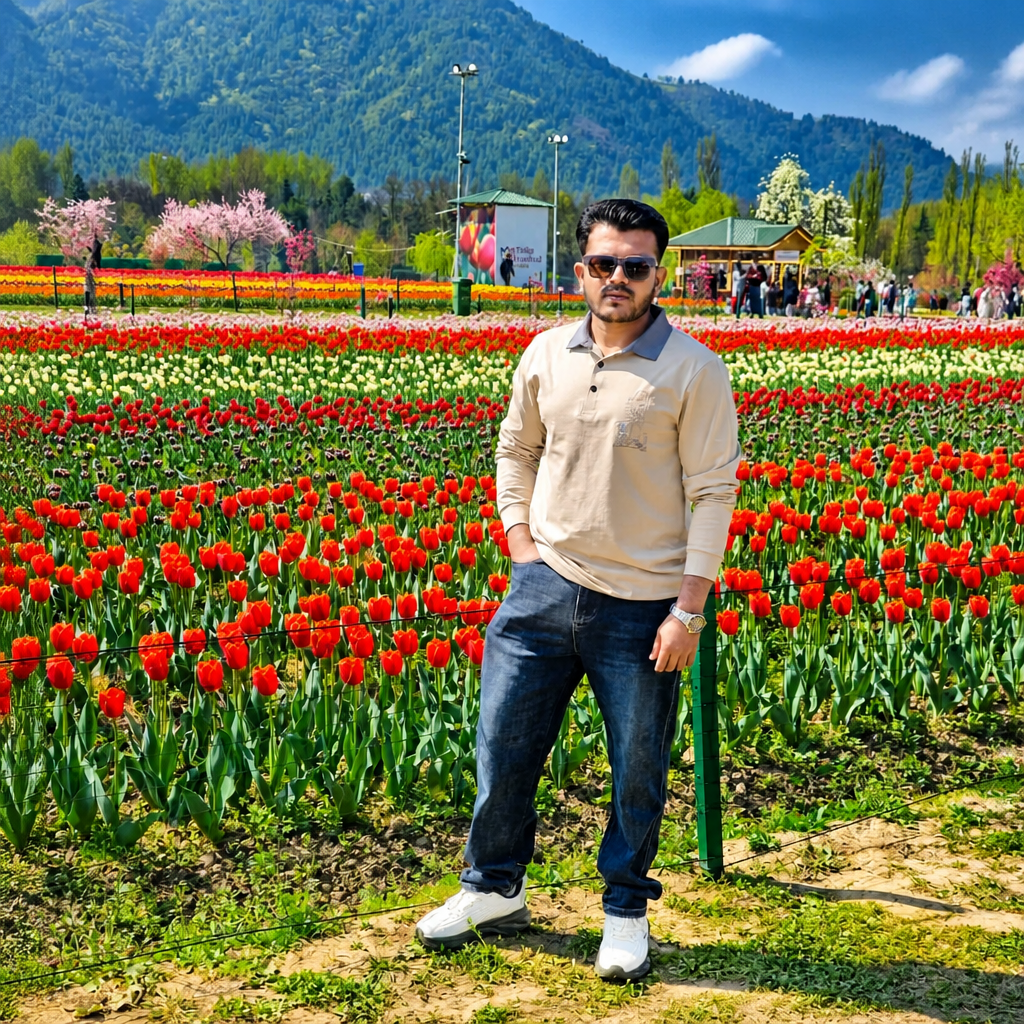
The garden spans approximately 74 acres. Some older sources also cite it as 600 kanals, which is roughly equivalent to 75 acres. The garden is spread across 7 terraces and holds the distinction of being the largest tulip garden in Asia. In today’s age of Instagram reels and photography, this is an absolutely ideal place. We too made several reels here and captured countless photographs.
After leaving here, we offered the Friday prayer at a nearby mosque. We then sat by Dal Lake and tried to wash away our fatigue with cold drinks. Though it was the spring season, the afternoon in Srinagar felt quite warm. From here, we took an auto-rickshaw and arrived at Hazratbal.
Hazratbal is also situated on the banks of Dal Lake, as is the Tulip Garden. Even so, the distance between the Tulip Garden and Hazratbal is around 5 to 7 kilometres. It took us 10 to 15 minutes to get there.
Being a Friday, there was quite a crowd here, and a market was also set up within the premises — one that is held every Friday. While many things are sold here, it is primarily a market for essential items such as vegetables, greens, and fruits. People come from the rural areas of Kashmir to set up their stalls here. Besides this, there is also a large permanent local market here that runs every day, where everything is available.

Hazratbal, located on the northern banks of Dal Lake in Srinagar, is a sacred place that holds immense significance in Islamic tradition. At first, we assumed there would be the shrine of some saint here, but there is no shrine. What is preserved here, rather, is the sacred “Moi-e-Mubarak” — the holy hair of the Prophet Muhammad ﷺ — which is why this place is a deeply revered centre of devotion.
Millions of pilgrims visit this white-sloped building every year, particularly on Shab-e-Qadr, Eid Milad-un-Nabi, and other religious occasions. Set against the turquoise backdrop of the lake, this sacred place presents a spiritual and magnificent sight with its serenity and calm. Beholding Hazratbal from various points along Dal Lake is in itself a uniquely moving experience.
From here, we returned to Ghat Number 17 on Dal Lake. We were now about to take the famous and beautiful shikara ride on Dal Lake. Evening had already fallen. The cold was now growing sharper, and this was the perfect time for a shikara ride.
But before that, we friends were feeling a little hungry, so we walked over to Ghat Number 19 to eat Kashmir’s famous fish — Rainbow Trout. Right in front was a small food stall where this fish was available. It can be fried as well, but its true flavour lies in having it grilled. It is found only and only in Kashmir. After 20 to 25 minutes, it arrived at our table — perfectly grilled and accompanied by four different chutneys. And then — the captivating view of Dal Lake before us, the beautiful cold evening, the company of friends, and the exquisite taste of Rainbow Trout.
Whenever you visit Kashmir, do make sure to eat the Kashmiri dishes. Especially this Rainbow Trout and Wazwan — do not leave without having them.
Returning to Ghat Number 17, we hired 3 shikaras. Here too, you should bargain. One shikara owner was quoting us 1,500 rupees per boat. We bargained brilliantly and got all 3 shikaras for just 1,500 rupees in total. And then began the magnificent shikara ride.
A shikara ride on Dal Lake — especially as evening begins to fall — is an experience that fills the soul with peace. When we glide across the lake in the afternoon light, the reflection of the mountains in the blue water, the shade of the chinar trees, and the boundless colours of the sky leave us utterly spellbound. But as the evening descends, the very character of the lake changes.

The shikara then floats silently, like a white pearl, in a wash of crimson and golden light. As the sun sets on the horizon, it turns the marble-like trees into gold, and in the quietness of the lake, only the gentle rocking of the shikara can be heard. The cool evening breeze, the soft lapping of the water, and the call of the azan drifting in from the distance — all of these together weave a melody that touches the heart. In that moment, the soul of Kashmir, its simplicity, and its boundless beauty all come together within a single shikara.
Within Dal Lake itself, the “Meena Bazaar” is set up through houseboats. Things here tend to be expensive, but this market on water is a unique place unto itself.
While you are on your shikara ride, you will notice Kashmiri brothers selling fruits and kahwa from other boats passing by. They will come right up to your shikara as well. In such moments, take a plate of fruit from them and enjoy the experience. They will also come to you offering kahwa. A shikara ride on Dal Lake in the evening, paired with kahwa, doubles the joy. Do make sure to have the kahwa from Shaukat Bhai and Mushtaq Ahmad Bhai. You will not need to look for them — they will find you themselves.
After dinner, we kept strolling along the banks of Dal Lake. Our hotel too was right there. A local market sets up here every day, right on the footpath facing Dal Lake.
One wonderful thing about Srinagar is that the markets, businesses, and daily activities all begin early in the morning — and by 9 at night, everything shuts down. The good habit of sleeping early and waking early was clearly visible here.
The local people of Srinagar are very warm, hospitable, and courteous. Their conversation is sweet and pleasant. They are gentle in nature. They have a wonderful sense of how to live well, and it shows in Srinagar itself. They take care of cleanliness. There is a visible concern — not just for their own homes and shops, but for keeping the city clean as well. Who is not familiar with the beauty of Kashmiris? But along with their faces, their character is equally beautiful.
Beauty is everywhere in Srinagar. Dal Lake is embedded in Srinagar’s very heart. Beautiful gardens like Shalimar Bagh, Nishat Bagh, and Tulip Garden add countless dimensions to Srinagar’s beauty. The entire area of Lal Chowk and its surroundings is one big marketplace — from large brand showrooms to the best local footpath shops, everything is here.
There are grand restaurants and small local food stalls. Yet not a speck of filth anywhere. Cleanliness reigns everywhere. There is no hustle, no noise — just absolute tranquillity. Srinagar is that city where even if a traveller were to stay for months, he would never feel like leaving.
Srinagar — this pearl of Jammu and Kashmir — is a living example of nature’s unmatched beauty. The lush gardens here, the golden paddy fields, and the snow-covered mountains captivate your heart completely.
When you watch the evening sun sink into the clear, translucent waters of Dal Lake, you truly feel as though paradise has descended to earth. Sitting in the shade of a chinar tree, breathing in the fragrance of the green and lush valleys, the soul is filled with an inexplicable sense of calm.
The romantic atmosphere of Srinagar, its magnificent culture, and its hospitality can never be forgotten. This place leaves the imprint of its memories in every traveller’s heart — forever.
In any case, we had made this our base. From here, we were to make day trips to Sonamarg, Gulmarg, Doodh Pathri, and Pahalgam — one each day — but we were to return to Srinagar every night to stay. And that was a good thing. This way, we could spend as much time as possible in Srinagar.
— — — — To be Continued
(Read chapter 2 of Kashmir Diary in next article)