hirty-three-year-old Zohran Kwame Mamdani is currently being discussed not only in the United States but across many countries around the world — especially in Africa and South Asia — because Zohran Mamdani is an Indian-origin American citizen, and he was born in Uganda. Zohran Mamdani is the son of the renowned film director Mira Nair, who hails from Punjab, while his father, Mahmood Mamdani, is originally from Gujarat and is a professor at Columbia University. Zohran has won the election for the Mayor of New York City, and that is why he has suddenly become a topic of global conversation.
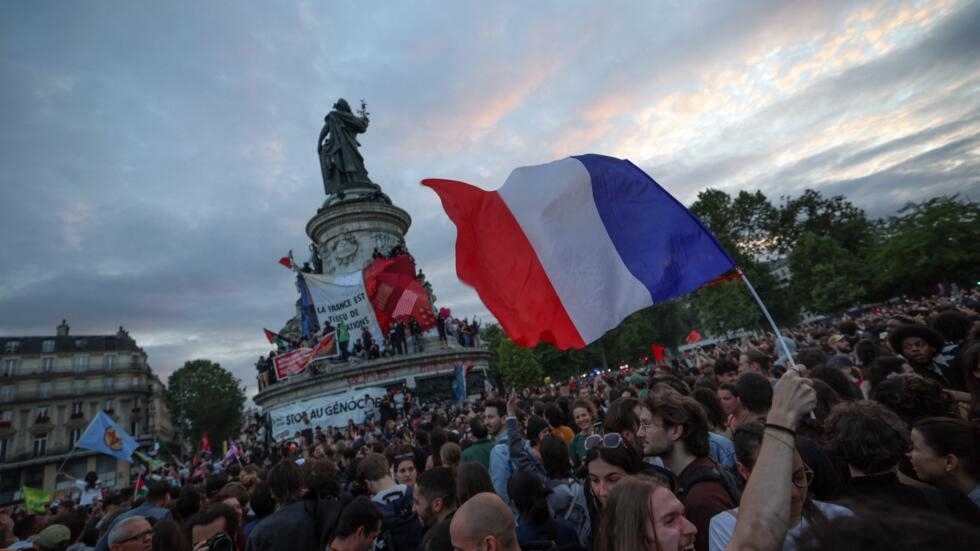
Zohran ran a remarkable election campaign. His views, statements, and his confident way of presenting them set him apart from all the other candidates. He adopted a completely different stance and expressed it openly. While all other candidates talked about visiting Israel after winning the election, Zohran was the only one who refused to go to Israel. He said he would stay in New York and work for the welfare of its citizens. On the Gaza issue too, Zohran took a position very different from the rest of the politicians and called the ongoing massacre in Gaza a “genocide.” In fact, during his mayorship, he openly said that if Israeli Prime Minister Benjamin Netanyahu came to New York, he should be arrested. Zohran called Netanyahu a “war criminal.”
Zohran did not try to hide or downplay his Muslim identity, even though Islamophobia in the United States is at its peak. Muslims make up only 3% of New York City’s population, while Zionist influence and control over the city’s political landscape is significant. Yet, Zohran still called the Gaza genocide a genocide, without trying to create any “balance.” In today’s world, where Israel and AIPAC control almost all politicians, Zohran Mamdani’s statements and positions are nothing less than political suicide.
Because he is of Indian origin, a journalist also questioned him about India’s Prime Minister Narendra Modi. In response, Zohran said that he holds Narendra Modi responsible for the Gujarat riots and that he would not allow him to hold a rally in New York. Perhaps this is why, while the Indian media proudly celebrates people like Rishi Sunak and Kamala Harris for being of Indian origin, there is no such joy or pride when it comes to Zohran. Even Indian-Americans do not seem particularly happy with him.
Zohran Mamdani openly supported Palestine in direct opposition to his own country’s pro-Israel policies. He calls U.S. President Donald Trump a dictator and a king. Because of these strong positions, during the elections he faced hatred targeting his non-American origin and his Muslim identity.
Some said, “If Mamdani becomes mayor, he will make his children study Shariah law instead of the Constitution.” Some mocked him using references to 9/11. Some called him a jihadi and a terrorist. Someone even trolled Mamdani by showing the Statue of Liberty covered in a burqa.
Despite facing hateful and Islamophobic attacks because of his Muslim identity, Zohran remained firm on his principles and positions. He openly expresses his Muslim identity and speaks for his community.
Meanwhile, many Muslim politicians in India try to hide their identity and constantly attempt to prove how “secular” they are — so much so that they hesitate even to speak up for their own Muslim community.
Zohran Mamdani does not change his stance out of fear that others might get offended or stop voting for him. He does not try to “balance” his positions. He speaks openly, clearly, directly, and with full confidence.
Indian Muslims must learn from Zohran Mamdani — that without caring about who gets offended, they should speak openly about their issues and their demands. They should express their stance boldly and should raise their voice against the injustices happening to them.
All secular parties in India must also learn from Zohran, that the fear of losing majority votes should not make them compromise on their values and principles. If you stay among the people, understand their issues, and have a clear action plan to solve them, the public will definitely vote for you.
America may have a thousand flaws, but it still has space for linguistic, religious, and regional diversity. In America, a non-American-origin Muslim candidate can win despite having firm and unconventional positions. This is the sign of a strong and stable democracy.
But can one even imagine such a scenario in India? When Indian Muslims face accusations of being Rohingya or Bangladeshi almost every single day? When calling them “Pakistani” and humiliating them has become common? In India, the idea of a Muslim becoming Prime Minister is considered nothing less than a sin. In fact, forget the Prime Minister — even imagining a Muslim becoming the Chief Minister of any state is almost completely unacceptable here.
Even saying such things angers the majority community here; the Islamophobia hidden within them begins to surface in the form of rage. In India, generally, non-Muslims — especially Hindus, who form the majority — do not vote for a Muslim candidate. For a Muslim candidate to win an election, it is necessary that the seat has a Muslim-majority population. Meanwhile, a Hindu candidate can easily win even from a Muslim-majority seat. This is a bitter truth of Indian democracy, a sign of a weakened democracy.
In India, if any Muslim speaks about forming their own political party, the strongest opposition comes from the so-called secular camp itself. Secular parties make every possible effort to ensure that Muslims never develop an independent Muslim political leadership of their own. For this purpose, they are even willing to indirectly help the communal camp win.
It is not just these so-called secular parties — even the Muslim leaders within these parties, and Muslim supporters of these parties, stand more firmly against independent Muslim leadership than the communal camp does. For them, even the idea of a Muslim forming his own independent political leadership is unacceptable. They believe that doing so will anger the majority community. Therefore, they prefer to remain subservient to the majority.
It is a harsh reality of India that even secular parties offer election tickets to Muslim candidates only from constituencies where Muslims are already in the majority. Then what kind of secularism is this? True secularism would mean that just as a non-Muslim candidate from a secular party can win from a Muslim-majority seat, a Muslim candidate should also be able to win from a non-Muslim-majority seat. Only then can secularism truly succeed.
But secular parties themselves restrict Muslims to Muslim-majority constituencies. And on top of that, they try their best to ensure that no Muslim can become a strong, mainstream, nationally recognized leader.
Zohran Mamdani’s unique election campaign is also a powerful lesson for today’s politicians. In the early stages of the New York mayoral race, he was ranked ninth. Only one percent of people were willing to vote for him. But Mamdani began meeting citizens, understanding their struggles, identifying the challenges they faced, and then made those issues the core of his campaign — while also presenting practical solutions.
Zohran spoke about how living in New York had become extremely expensive, and how it could be made affordable again for everyone. He said that if he became mayor, he would impose clear and reasonable limits on the rapidly rising and arbitrary rent prices. Along with this, he promised the construction of thousands of new homes so that every New Yorker could have a roof over their head. Childcare in New York is very expensive; Zohran proposed free childcare to solve this burden. Similarly, he promised fast and free bus service for everyone. He also talked about opening public grocery stores in the city where basic necessities could be available at affordable prices.
Mamdani raised the slogan: “A city for everyone, not just for a few.” Zohran directly challenged America’s liberal elite class — those who want to accumulate all the wealth for themselves and demand tax breaks despite being extremely rich. Zohran spoke about imposing additional taxes on such wealthy individuals.
The issues he raised were the actual difficulties faced by citizens. When Zohran presented real solutions to these problems, the public rallied behind him. He didn’t make grand, unrealistic promises; he simply promised what a mayor could realistically deliver.
Mamdani faced strong opponents — candidates who had money, power, status, and control. Even U.S. President Donald Trump and Elon Musk openly supported one of his rivals. Because of the rival’s influence over mainstream media, Mamdani turned social media into his weapon. His unique social media presence, editing skills, and strategy defeated his opponents.
During his campaign, Zohran Mamdani also used Urdu, Hindi, Arabic, and Bengali. Not just that — he even incorporated Bollywood film clips, styles, and dialogues. Throughout his campaign, media appearances, and social media presence, Mamdani demonstrated extraordinary confidence, wit, and ambition.
Today’s politicians — especially young politicians — must learn that to win elections, there is no need to incite people against each other, spread hate, or use intimidation tactics. What is needed is to stay present among the people. If you have a clear vision, understand people’s issues, and have a practical action plan and determination to solve them, you can win the election.
Written by Imran Ahmed